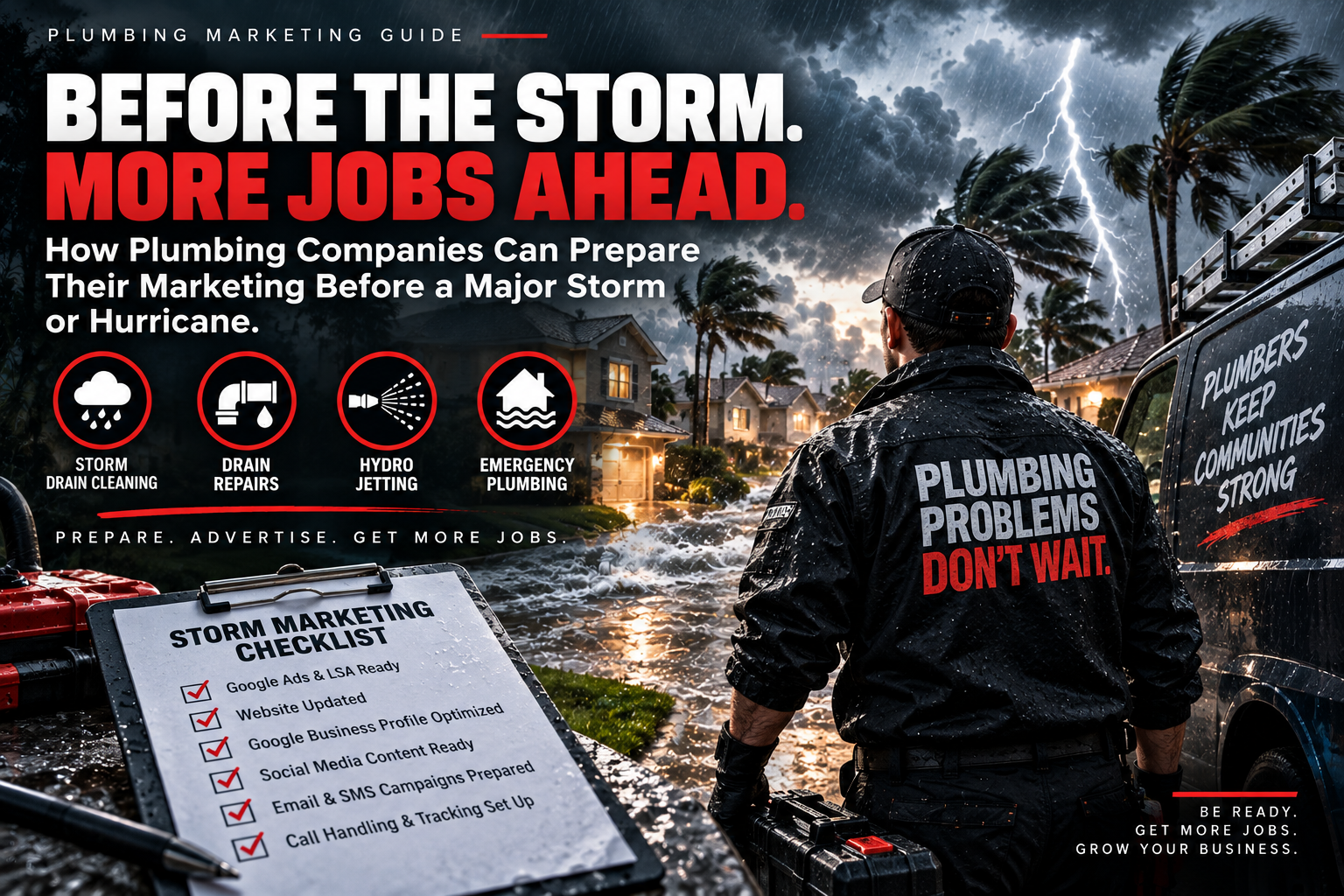
Before a major storm, get your marketing ready around the jobs your team can safely handle. Confirm your crew’s availability, prepare your ads, check your website and make sure someone will answer the phone. Trying to sort all of that out while dispatch is already busy makes a difficult week harder.
Heavy rain and hurricanes can change what homeowners need from a plumber. Some people want a troublesome drain checked before the weather arrives. Others need help with a backup or leak once conditions are safe. Your marketing should make it clear what you offer, where you can work and how to reach you.
The goal is to help people find reliable service and keep your schedule manageable. Start with these ten checks.
1. Know How Much Work Your Team Can Take On
Before increasing your advertising budget, talk with your technicians and dispatchers. How many additional jobs could you handle without overbooking or making promises you can’t keep?
- Which technicians will be available, and what equipment will they need?
- Will you offer emergency service or answer calls after hours?
- Which neighborhoods can your team realistically reach?
- Which storm-related plumbing and drainage services do you provide?
- Who will update customers if appointments or arrival times change?
Account for road closures, power outages and the possibility that your own employees will need time to prepare their homes. Follow local emergency guidance, and never send a crew through flooded roads to fulfill an advertised service area.
Set your marketing budget around that capacity. More calls only help when you can respond and do the work.
2. Have Your Google Ads Ready Before the Weather Changes
When a homeowner needs a plumber quickly, Google Search may be the first place they look. Have your campaigns ready before you’re juggling a full dispatch board.
Build your ads around services you actually offer. Depending on your business, that might include drain cleaning, storm drain cleaning, hydro jetting, drain repair or emergency plumbing. Keep the service in the ad consistent with the service customers find after they click.
For a preventive service, a straightforward message such as “Heavy Rain Expected? Schedule a Drain Check” can work when it matches the local forecast. For urgent calls, “Drain Backup? Call for Availability” tells homeowners what to do without promising an arrival time you may not be able to meet.
Check your locations, ad schedule, phone number and budget before turning up spending. Exclude areas you can’t serve. If you need help setting up campaigns, Strictly Plumbers offers PPC management for plumbing companies.
3. Check Your Local Services Ads Account
If you run Google Local Services Ads, review the account while you still have time to fix problems. An outdated service area or unanswered lead can waste an opportunity even when the rest of your marketing is ready.
- Confirm your service areas, job types and business hours.
- Check that your account is active and any required verification is current.
- Review your budget and who will respond to incoming leads.
- Make sure phone coverage matches the availability you’re advertising.
Google’s Local Services Ads settings guidance explains where to review business details and budget. Increase spending only when you have room for more work, then watch lead quality and booked jobs. If your schedule fills up, adjust the campaign rather than continuing to pay for calls you can’t serve.
4. Make It Easy to Request Service on Your Website
Open your website on your phone and pretend you’re a customer with a backed-up drain. Can you find the right service, see whether you cover the area and call without searching through several screens?
Your relevant service pages should include:
- A working click-to-call number and a short service-request form.
- The areas you serve and your current availability.
- A clear explanation of the plumbing problem you can address.
- Customer reviews, real company photos and accurate licensing information.
Test the phone links and form before demand picks up. If weather affects your hours or coverage, add a brief, accurate update. Avoid advertising storm drain work, flood cleanup or round-the-clock service unless your company provides it.
5. Build Your Search Visibility Ahead of Time
SEO takes ongoing work. Publishing something the day before a hurricane doesn’t guarantee you’ll appear when homeowners start searching.
Keep your drain cleaning, hydro jetting, drain repair and emergency plumbing information useful and current throughout the year. Answer the questions your customers already ask:
- Why does my outdoor drain keep clogging?
- What should I do if a drain backs up during heavy rain?
- When does a drain need cleaning, and when might it need repair?
- Is hydro jetting appropriate for my drain?
Explain what an inspection can establish and when to call. Don’t suggest that drain cleaning can prevent every type of flooding. Surface flooding, storm surge and overwhelmed public drainage can involve problems beyond a home’s plumbing.
A steady SEO plan for your plumbing company gives you time to improve that information before an urgent weather event.
6. Keep Your Google Business Profile Accurate
Homeowners may see your Google Business Profile before they visit your website. Check your phone number, hours and service information, then use updates to tell people what they need to know.
Before the storm, you might explain the warning signs of a blocked drain and how to schedule a check. During a disruption, state your actual availability. Afterward, let customers know which plumbing or drainage issues your team can inspect.
Use the National Weather Service and local authorities for weather information. Keep your messages tied to current conditions, and remove or replace updates when they no longer apply.
7. Share Helpful Advice on Social Media
A short video from the owner or a technician can be more useful than another sales graphic. Explain one common problem, what a homeowner might notice and how your team can help.
For example: “If your outdoor drain has been slow for a while, give us a call to discuss having it checked before the expected heavy rain. We’ll let you know our availability and whether an inspection makes sense.”
Share the video on the channels your customers use, whether that’s Facebook, Instagram, YouTube, TikTok or LinkedIn. If you promote it, limit the audience to your service territory and keep the message consistent with your crew’s schedule. Helpful, calm communication gives people a reason to remember your company.
8. Reach Out to Customers Who Already Know You
Your customer list is a good place to start. A homeowner you’ve helped before may appreciate a timely reminder about a recurring drain problem or a service they postponed.
Send email or text updates to customers who have agreed to receive those messages. Keep them brief: explain the relevant conditions, the signs of a problem, the services available and how to schedule. Respect opt-outs and avoid repeated messages that say the same thing.
Don’t imply that every customer needs preventive work. Give people useful information and a clear way to ask whether service is appropriate for their situation.
9. Put a Clear Plan in Place for Incoming Calls
An unanswered phone can undo a good campaign. Before increasing ad spending, decide who handles calls, messages and online service requests during each part of the day.
- Confirm normal-hours and after-hours coverage.
- Give dispatchers current service areas and appointment availability.
- Assign someone to follow up on missed calls and form submissions.
- Prepare a clear message for times when your schedule is full or service is suspended.
- Test any overflow answering service or AI-assisted reception before relying on it.
Customers need an honest answer about what happens next. An answering service can collect details, but it shouldn’t promise emergency dispatch or a specific arrival time without confirmation from your team.
10. Follow Each Lead Through to a Completed Job
Clicks and calls tell you whether a campaign is getting attention. Your booking and job records tell you whether that attention is helping the business.
Use call tracking, analytics and your CRM to follow the same sequence: ad spend, leads, qualified leads, booked jobs, completed jobs and revenue.
Keep storm-related campaigns identifiable so you can compare their results. Separate new inquiries from repeat callers, and record why a lead didn’t become a job. A customer outside your territory, an unanswered call and a fully booked schedule each point to a different problem.
Review cost per booked job and completed-job revenue alongside your workload. Those numbers can help you decide what to repeat when the next weather event approaches.
Keep Your Marketing Useful After the Storm
Some homeowners won’t notice a drain problem or leak until the weather clears. Keep relevant campaigns running while demand and your capacity justify them, and update any message that suggests the storm is still approaching.
- Before: Prepare your campaigns, explain preventive services and confirm your team’s availability.
- During: Communicate service changes, respond to inquiries and put safety first.
- After: Help customers arrange inspections and repairs, then review the results.
Assign someone to check the ads and public updates as conditions change. That helps you avoid outdated warnings, inaccurate hours and promises your team can no longer meet.
Let Strictly Plumbers Help Build Your Storm Advertising Plan
You already have crews, customers and dispatch to look after. Strictly Plumbers can help prepare the marketing around them, from Google Ads and Local Services Ads to SEO, website updates, paid social campaigns and lead tracking.
We’ll work with you to choose the services to promote, the areas to target and a budget that fits the jobs your team can handle. Our plumbing marketing services also include Yelp advertising and phone reception and website chat solutions. Ask about the channels that fit your business rather than trying to launch everything at once.
Schedule a conversation with Strictly Plumbers or call 858-412-0813 to discuss your Storm Advertising Plan before the next major weather event.